Tuesday, 30 September 2014

The Mountain Wreath (by Petar II Petrović-Njegoš) - A review

The Mountain Wreath


Location: Montenegro
Author: Petar II Petrović-Njegoš
Year: 1847
Genre: Drama in verse

For the second instalment of my Banned Books Week reading list, I am reviewing The Mountain Wreath by Petar II Petrović-Njegoš (henceforth referred to as Petar because I don't want to keep copy-pasting that family name forever). This is a fairly intense oeuvre, writing an epic in verse in the form of a play, combining three major literary modes. Old Petar did not half-arse anything, clearly.

Petar, as you might have made out from the name, was royalty. Prince-Bishop of Montenegro, in fact. And this particular epic focuses on the attempts of his ancestor Metropolitan Danilo I Petrović-Njegoš (oh, for crying out loud!) to bring peace to the region's warring tribes, written in the form of fictitious episodes that provided a picture of the wider setting in addition to relating their own smaller tales. As you can imagine, this came with some bias and fairly strong political views embedded in the tale, with various historians and politicians looking to appropriate aspects of the epic for their own purposes. With more than a bit of Islamophobia and scope for other contentious views, some have even linked this work to ethnic cleansing and tyrannicide. Needless to say, this is a controversial work, but not one without great literary merit. There is no shying away from either aspect, really.

It's hard to summarise the actual work, so I'll rely on a small extract from Wikipedia's bare minimum description of the theme:
Starting as a poetic vision it develops into a political-historical drama that expands into a wreath of epic depictions of Montenegrin life, including feasts, gatherings, customs, beliefs, and the struggle to survive the Ottoman oppression. With a strong philosophical basis in its 2819 verses The Mountain Wreath depicts three distinct, opposing civilizations: the heroic-patriarchal classic Montenegro, the oriental-Islamic Ottoman Empire and the west-European Venetian civilization.
The poem is constructed around a single, allegedly historical event, that took place on a particular Christmas Day in the early 1700s, during Metropolitan Danilo's rule: the mass execution of Montenegrins who had converted to Islam, known as "The Inquisition of the Turkicized" (Истрага Потурица or Istraga Poturica).

It is a massive work, and a lot to get through. The detail and skill with which the epic was written paint a vivid picture of life in that time and place, and it seems likely that the setting reflected Petar's time as much as it did Danilo's. It is a magnificent work, and on literary merit alone it is truly one of the great epics. However, there is much that is problematic with the politics of the piece. In truth, it is written with the perspective of that period, and one has to admit that Petar brought more balance to the manner in which it was portrayed than most of that time would have accepted personally (including Petar, to be honest). This is possibly why people of various political ideologies have attempted to utilise this work in their own campaigns, but at the end of the day there is much in here that should not influence modern thought in a world we'd all like to believe has progressed since 1847. Alas, this is not the case, and the hateful ones are more than okay with continuing to take the wrong lessons from such works.

Overall, I'd say this is worth a read. It is problematic in its ideological basis, but it is a grand work and deserves to be read for literary merit alone. Beyond that, it's also worth reading to get a better understanding of the beliefs, and to have a healthy debate about what's involved.

Monday, 29 September 2014

One Day of Life (by Manlio Argueta) - A review (Banned Books Week)

One Day of Life


Location: El Salvador
Author: Manlio Argueta
Publisher/Year: Vintage Books/1983 (original in Spanish in 1980)
Genre: Drama

In USA, the week of 21st to 27th September, 2014, was 'celebrated' as Banned Books Week 2014. Of course, the list of books there is essentially limited to books currently banned within that country. Somewhat restrictive for a global reading challenge such as this one. So as part of this challenge I decided to read some banned books from around the world in September, irrespective of where or when they were banned. Most of these are still off limits in certain countries, and with these posts I join the multitude protesting against such censorship.

For the first of my banned books reading list, I picked up Manlio Argueta's One Day of Life, a book banned in El Salvador immediately after its release in 1980 as it described various human rights violations by the country's paramilitary intelligence organisation. The book itself has raised much praise over the years, but remains in the bad books (no pun intended) of pro-government entities in El Salvador.

The plot, as given by Wikipedia:
Guadalupe "Lupe" Guardado is a middle-aged Salvadoran woman who lives near Chalatenango, El Salvador. During the day she is required to do what she can to support her family, while her husband works for a wealthy landowner. Her husband José has become involved in rebellion against the economic conditions and became a leader in the Christian farmers organization. Fearing persecution for his opposition, José regularly stays "in the hills" after work and sees his family little. The Guardado's son Justino was killed by the "authorities" prior to the events in the novel, and their son-in-law Helio has "disappeared." Guadalupe's granddaughter Adolfina relays the protest at a cathedral, as well as a massacre of students on a bus. At the end of the novel, the authorities bring a beaten man to Guadalupe and Adolfina who had said the name "Adolfina" after being severely beaten. Adolfina does not recognize the man, but Guadalupe recognizes her husband José. On his previous advice, she denies knowing him, and he is taken away.

It is a powerful novel, capturing both the everyday aspects of family life and the wider context of political turmoil and persecution with a rare combination of simplicity and intricate detail. It lacks some of the flair of various other Latin American novels, but what it lacks in style it certainly makes up for in substance. This is a troubling tale, and one that should grip the reader with a harrowing tale of a family's troubles.

The political and historical settings of this novel are essential, and Argueta does a tremendous job of bringing these to life. Everything in the novel feels very genuine, mostly because the geographical and political settings were utterly real, and the reader does get transported into this other realm to some extent. Again, this is not the most skilled novel around, but it is effective. It does what it sets out to do, and tells a harrowing tale while setting up the environment perfectly.

It is a shame that a book like this was banned, and I hope that others among you read it if you can get your hands on a copy. 

Monday, 1 September 2014

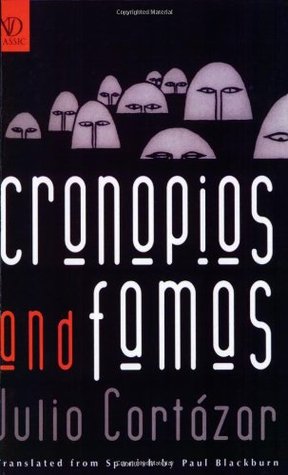
Cronopios & Famas (by Julio Cortazar) - A review

Cronopios & Famas


Country: Argentina
Author: Julio Cortazar
Publisher/Year: New Directions/1999 (Original in 1962)
Genre: Literary fiction

This is a rather strange collection of stories and seemingly meaningless pieces, but in many ways this one work is characteristic of Julio Cortazar's body of work. Divided into four 'chapters,' Cortazar explores a whole world through his unique brand of magical realism.

The first section of the book, titled 'Instruction Manual,' offers bizarre and and often unlikely instructions on a wide range of topics. The second chapter, 'Unusual Occupations,' uses numerous characters of seeming unoriginality and ends up using them in remarkable ways. The third, 'Unstable Stuff,' features more vignettes of events and people, building a vivid picture of everyday life. The final chapter has the same name as the book itself, dealing with Cortazar's own creations, cronopios (naive, idealistic, disorganised, sensitive beings), famas (literally, 'fames') and esperanzas ('hopes').

I'm not diving into the content of the book itself, since the defining quality of the book is Cortazar's storytelling. His style is fluid and beautiful, and draws the readers in wonderfully. Not the most substantial tales, perhaps, but for those who love stylish and poetic prose with a combination of surrealism and magical realism, this is definitely worth a read. The setting is technically Argentina, but in reality these tales could take place anywhere and everywhere. Indeed, were it not known that the book is Argentine, there's little to give any firm idea of a setting for the book!

Sunday, 31 August 2014

Night Train to Lisbon (by Pascal Mercier) - A review

Night Train to Lisbon


Country: Portugal (sort of)
Author: Pascal Mercier
Publisher/Year: Grove Press/2007 (First published 2004)
Genre: Literary fiction

It seems the actual theme for the month of August never went up, so I'm hastily putting together reviews for various books I did read over the course of the month, starting with Night Train to Lisbon.

The synopsis, as given by Goodreads, is as follows:
Raimund Gregorius is a Latin teacher at a Swiss college who one day—after a chance encounter with a mysterious Portuguese woman—abandons his old life to start a new one. He takes the night train to Lisbon and carries with him a book by Amadeu de Prado, a (fictional) Portuguese doctor and essayist whose writings explore the ideas of loneliness, mortality, death, friendship, love, and loyalty. Gregorius becomes obsessed by what he reads and restlessly struggles to comprehend the life of the author. His investigations lead him all over the city of Lisbon, as he speaks to those who were entangled in Prado’s life. Gradually, the picture of an extraordinary man emerges—a doctor and poet who rebelled against Salazar’s dictatorship.

While this is not an uninteresting plot, the strength of the book lies in the writing. At the end of the day the book essentially serves as the reflections of one man, and this makes his internal narrative crucial. Mercier delivers on this front with a beautifully written, introspective look at what truly matters. The philosophical tone is crucial to what makes this book work, really.

It's not the most eventful book, and apart from the protagonist nobody else really gets fleshed out. So I have seen as many negative reviews online as I have seen positive ones, this being a book that could potentially bore people. On the location front, it should be noted that this book does not start out in Lisbon, and a good chunk of it takes place on a train, but every now and then (and more so towards the end) the historical setting of Portugal in that era shines through.

If you're okay with reading this for the lovely writing style and introspective nature, I recommend going for it. It's not quite Calvino, but I can occasionally see enough Calvino in the writing to keep my biased self going all the way through.

[Sorry, all my reviews for the August books will be like this.]

Thursday, 31 July 2014

Strays of Rio (by Edith Parzefall) - A review

Strays of Rio


Author: Edith Parzefall
Country: Brazil
Published: 2012
Genre: Thriller

Damn, it's been a busy, busy month! Completely forgot about this until today. As such, I hope you'll forgive my reliance on shortcuts and a teeny tiny review.

It's one of those times where I must cheat a bit and copy the plot from Goodreads:
Lisa Kerry witnesses a private death squad attack street kids close to her bookstore. When the police take no action, she vows to purge Rio of the ruthless killers. To keep him out of the line of fire, she must quell her affection for the one man cut out to exorcise the demons of her past. Drawing strength and rage from the abuse she suffered as a young girl in a juvenile detention center, Lisa closes in on her marks.
Unable to get to the rich and powerful leader of the recreational killers, she enlists the older brother of one of her street urchin friends—a drug lord. Lisa's pursuit of justice spirals into a violent struggle to survive, for herself, her young charges, and the man she loves.

Based on the plot, to be honest, I was not so impressed. These kinds of tales are a dime a dozen nowadays, and an ebook that is largely self-published does not inspire confidence. But the book manages to surprise. The writing style is a bit rough around the edges at times, but on the whole the book does a good job of building a solid narrative. The protagonist is clearly defined as a character, and the supporting cast also gets chances to shine.

Where the book really shines through is in its ability to capture the nature of a crime novel in Rio. I'm a bit of a Brasilophile myself, so I can say with some certainty that it is very hard to get the feel of what Brazil truly is, the light and the dark and everything in between. But Parzefall gets this right better than I would have expected, in no small part due to the fact that she has apparently spent a not insignificant amount of time in the country. And this is where the book starts to differentiate itself from the run of the mill airport thriller.

Is the book a must read? Honestly, probably not. It shows potential but also falls short at times. But it's certainly an engaging and interesting read, and worth checking out.

Sorry for the ridiculously short review. Like I said, busy time. 3 months ago I was at 27 books/reviews for the challenge, right on track for my target. With a book a month since I am now at 30 with 5 months to go. That means 10 a month for the rest of the year. I can still do it if I have more months like February and April, but it will be tricky. Well, here's to the next 50 books!

[Note: This is my second Brazil book, making it the first country that got repeated thanks to the Book of the Month stuff. Still, I made it this far without a country repeat, so I'm glad!]

Monday, 30 June 2014

Palace Walk (by Naguib Mahfouz) - A review

Palace Walk


Location: Egypt
Author: Naguib Mahfouz
Publisher/Year: Anchor Press (English Translation)/1956 (1990 in English)
Genre: Literary fiction
Theme: The tale of a family led by a tyrannical patriarch, set during a tumultuous period in Egyptian history

Hey. Sorry about this, but it looks like this will be another one of those 'one lazy review' months, thanks to way too much work and also having been ill for most of the month. Still, here's a quick review of a renowned classic that I had never really read before. Nobel Laureate Naguib Mahfouz's Palace Walk is the first part of his 'Cairo Trilogy,' a look at the life of a Cairene family set in the period after the First World War. The series itself is considered one of the defining works of 20th century Arab literature, making it a long overdue read for me.

This first book introduces us to the family at the heart of the series, led by tyrannical patriarch al-Sayyid Ahmad Abd al-Jawad, who demands complete obedience from his wife Amina, his sons, Yasin, Fahmy and Kamal, and his daughters Khadija and Aisha. Despite his focus on certain traditional values and devotion from his family, al-Sayyid Ahmad himself flouts many of the rules he would insist on from others, engaging in various forbidden pleasures (including affairs with other women). Over the course of the book, the family is affected by a number of incidents, chief among them Yasin's marriage to a woman who subsequently cheats on him, Yasin's own secret adoption of his father's less 'proper' habits, and Amina's injury during an accident and her husband's subsequent decision to banish her for having gone out in his absence. The central event, in a way, is Aisha's wedding, where various plot points converge and several revelations are made.

The book is set in 1919, the year the First World War came to an end, and as such the Armistice plays a key role. Post-war tensions lead to political unrest and the rise of a nationalist movement, which Fahmy gets drawn into in opposition to the British occupation, while the rest of the family lives mostly in fear. The placement of a British camp right outside the family's residence complicates issues as well, the juxtaposition of conflicting tensions playing out in an interesting manner.

Not sure exactly what to say about this book. It is terribly interesting as a look at this family, this set of contrasting old and modern cultures and belief sets. The characters are well defined and engaging, with the hypocritical patriarch in particular being shown in his various shades. The writing style is engaging, and 'personal.'

The setting is brought out in a glorious manner, both for Cairo and the time period. Mahfouz masterfully captures a city caught between old and new, East and West, war and peace... If this novel has any failings, it is certainly not in its ability to describe the setting.

I'm not sure why it took me so long to read this book, but boy, am I glad I did! I look forward to reading the rest of the trilogy, and definitely feel this book is worth a read.

[Sorry again about the lazy review. Next month won't be much better, but August should be a bit of a bumper crop to compensate!]

Saturday, 31 May 2014

The Hypnotist (by Lars Kepler) - A review

The Hypnotist


Location: Sweden
Author: Lars Kepler
Publisher/Year: Sarah Crichton Books/2011 (in Swedish in 2009)
Genre: Crime
Synopsis: When a key witness to a brutal crime finds himself unable to remember the details of the incident, a detective partners with a hypnotist to break through and find the perpetrator

With the worldwide success of Stieg Larsson's Millennium Trilogy, much interest has been raised in the domain of Scandinavian crime literature. One supposed must read in this category is The Hypnotist, the first of the Joona Linna series from Lars Kepler (in actuality the couple Alexander and Alexandra Ahndoril). Despite my interest in this domain, I have consistently missed out on this series. Nevertheless, better late than never, so I gave it a go in my otherwise busy month of May!

Given my lack of time for this review and overall, I'll fall back on one of my old lazy tricks and give you the Goodreads synopsis:

In the frigid clime of Tumba, Sweden, a gruesome triple homicide attracts the interest of Detective Inspector Joona Linna, who demands to investigate the murders. The killer is still at large, and there’s only one surviving witness—the boy whose family was killed before his eyes. Whoever committed the crimes wanted this boy to die: he’s suffered more than one hundred knife wounds and lapsed into a state of shock. Desperate for information, Linna sees only one option: hypnotism. He enlists Dr. Erik Maria Bark to mesmerize the boy, hoping to discover the killer through his eyes.

It’s the sort of work that Bark has sworn he would never do again—ethically dubious and psychically scarring. When he breaks his promise and hypnotizes the victim, a long and terrifying chain of events begins to unfurl.

While this story maintains the realistic setting and fast pace of many of the better known Scandinavian crime thrillers, it is immediately apparent this is not quite as 'gritty' and 'real' as, say, a book from Stieg Larsson or Gunnar Staalesen. There is an unusual element coming into play throughout, whether it be the involvement of the hypnotist or the characters themselves. Detective Inspector Joona Linna is not your typical quiet genius detective as seen in such tale, but a protagonist happy to point out his brilliance. Bark, on the other hand, is clearly a bit unnerved by some aspects of the situation and how they pertain to his life, but maintains a steady, determine approach. The interaction between characters is interesting, and helps make the tale work.

It is a good work, perhaps less gripping than I anticipated but clearly still a winner. I wish I were in a position to tell you more, but for now all I can say is that it definitely seems worth a shot for those into the genre.